The Invisible Backbone: How Chinese Grandparents Became the World's Most Dedicated Caregivers
A Family Portrait Unlike Any Other
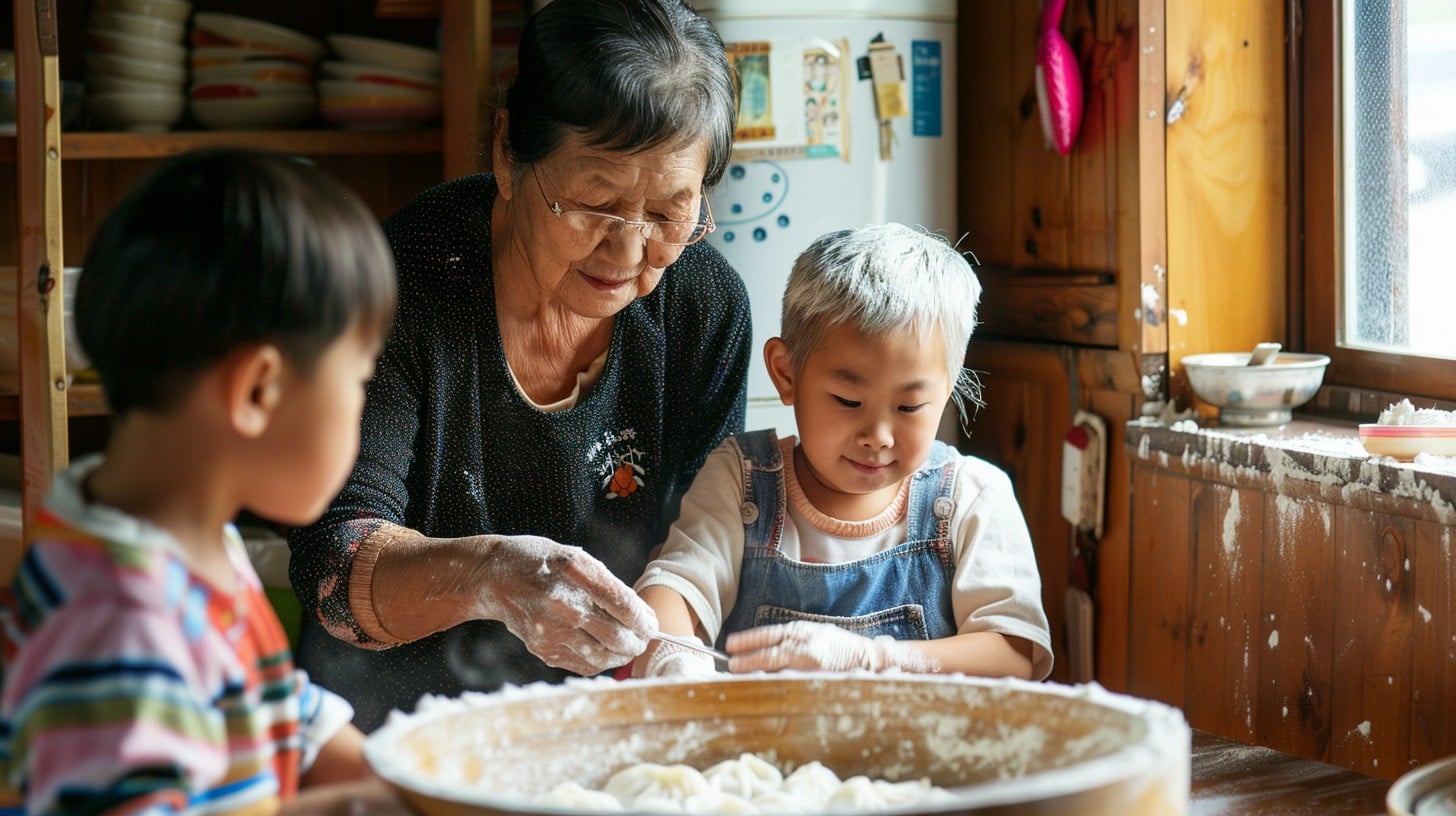
Picture a typical morning in Shanghai. A young couple rushes out the door at 7 a.m., briefcases in hand, commuting to demanding office jobs. Left behind in the apartment is their toddler — not with a hired nanny, but with nǎi nai (奶奶, paternal grandmother), who has moved from her hometown in Shandong province specifically to help raise her grandchild. She will spend the day cooking nutritious meals, taking the child to the park, singing old folk songs, and telling stories her own grandmother once told her.
This scene plays out in millions of Chinese households every day. It is not an exception — it is the norm. In China, grandparents are not peripheral figures who visit on holidays. They are, in many families, the primary caregivers of the next generation.
Rooted in Confucian Soil
To understand why, you have to go back more than 2,500 years to the teachings of Confucius. At the heart of Chinese family culture is the concept of filial piety (孝, xiào) — a profound respect and duty toward one's parents and elders. The Chinese character xiào itself is visually striking: it depicts an elder being supported by a younger person beneath them, a symbol of the younger generation literally holding up the old.
Filial piety is not just about obedience. It describes a web of mutual care and reciprocal obligation that flows between generations. Grandparents care for grandchildren; adult children care for aging parents. The family, not the individual, is the fundamental unit of society. This philosophy has shaped Chinese family life for millennia, and it remains deeply influential today — even as China has transformed into one of the world's most dynamic modern economies.
The 4-2-1 Problem
Modern China has added a new layer of complexity to this ancient tradition. Thanks to the one-child policy (1980–2015), China produced a generation of only children who grew up, married other only children, and created a uniquely pressured family structure: four grandparents, two parents, one child — the so-called 4-2-1 family.
This "inverted pyramid" has profound consequences. The two parents in the middle bear enormous responsibility: they must raise their child, advance their careers, and eventually support four aging parents — all at once. With limited and expensive childcare options in Chinese cities, and with both parents often needing to work full-time, the solution is almost always the same: call in the grandparents.
Research shows that in a typical 4-2-1 family, all four grandparents are likely to coexist for roughly 16 years after the grandchild's birth — a long window of potential support. And grandparents, for their part, often embrace the role wholeheartedly. Caring for grandchildren gives them purpose, keeps them active, and deepens family bonds. For many, it is the most meaningful chapter of their later years.
Migrant Grandparents: Moving for Love
Urbanization has added yet another dimension to this story. As hundreds of millions of young Chinese have migrated from rural provinces to booming cities like Beijing, Shenzhen, and Chengdu, their parents have often followed — not for work, but for family.
These "migrant grandparents" uproot their lives, leave their friends and communities behind, and relocate to unfamiliar cities to care for their grandchildren. It is a remarkable act of love and sacrifice. In their new urban environments, they may struggle with loneliness, language differences (many speak only regional dialects), and the disorientation of city life. Yet they stay, because family comes first.
This phenomenon reflects what sociologists call "downward familism" — a shift in which the entire family's energy and resources increasingly orbit around the needs of the youngest generation. The grandchild becomes the gravitational center of the family universe.
Left Behind: The Rural Side of the Story
Not all grandparents get to move to the city. In rural China, the story takes a more poignant turn. When parents migrate to cities for work, they often cannot bring their children due to China's hukou (户口) household registration system, which ties access to schools and social services to one's place of origin.
The result: an estimated 69 million "left-behind children" (留守儿童, liúshǒu értóng) — nearly a third of all rural children — who grow up in their home villages while their parents work hundreds or thousands of miles away. For these children, grandparents are not just caregivers; they are everything.
In poor rural provinces, surveys have found that over 80% of left-behind children under six are primarily raised by grandparents. These grandparent caregivers are often elderly, with limited formal education, doing their best under difficult circumstances. The emotional toll — on both the children who miss their parents and the grandparents who carry the weight of two generations — is immense.
Tensions Across the Generations
Of course, no family arrangement is without friction. The collision of traditional and modern parenting philosophies is a constant source of tension in Chinese households. Grandparents who raised children in an era of scarcity may have very different ideas about nutrition, discipline, screen time, and education than their university-educated, globally connected children.
The conflicts can be surprisingly specific: Should the baby wear more layers? (Grandparents almost always say yes.) Is it okay to let a toddler watch cartoons? Should children be pushed academically from an early age, or allowed to play freely? These debates play out in kitchens and living rooms across China every day.
The generational gap became so pronounced that in 2005, the city of Beijing actually established schools specifically to teach grandparents modern childcare techniques — a remarkable acknowledgment that the old ways and the new ways needed to find common ground.
A Tradition That Travels
For Chinese families who have emigrated to the United States, Canada, Australia, and beyond, the tradition of grandparental caregiving travels with them. Many grandparents immigrate specifically to help raise grandchildren in their new country, navigating visa systems, language barriers, and cultural adjustment — all in service of family.
Studies of Chinese immigrant communities show that grandparental support significantly reduces parenting stress for immigrant mothers, who often lack the extended social networks they would have had back home. The grandmother who once helped in Shanghai now helps in San Francisco, her role unchanged even as the world around her shifts dramatically.
But the diaspora experience adds new tensions, too. Grandchildren raised in Western schools absorb different values — individualism, directness, a different relationship to authority — that can clash with the more traditional worldview of their grandparents. Navigating these acculturation gaps requires patience, humor, and a lot of love on all sides.
The Indispensable Generation
China's grandparents are, in many ways, the unsung heroes of the country's economic miracle. While their children climbed the corporate ladder and built modern China, they were home — cooking, nurturing, teaching, and loving. They enabled the workforce participation of millions of mothers. They transmitted language, stories, and cultural memory to a generation that might otherwise have lost them. They held families together across vast distances and enormous social change.
As China's population ages and the pressures on the 4-2-1 family intensify, questions are being asked about the sustainability of this model. Can grandparents keep carrying this weight? Will today's only children be willing to do the same for their own grandchildren? These are questions without easy answers.
What is certain is this: in China, the bond between grandparent and grandchild is one of the most powerful forces in family life. It is ancient, adaptive, and deeply human — a thread of love that has stretched across dynasties, migrations, and revolutions, and shows no sign of breaking.